ERP System for Retail Business Your Complete 2025 Guide
Running a successful retail operation in 2025 means juggling omnichannel sales, inventory turnover, customer expectations, and tight margins—all at lightning speed. An ERP system for retail business brings every moving part together in one unified, cloud-based platform so you can deliver a seamless shopper experience while protecting your bottom line.
Why Retailers Need a Purpose-Built ERP System
Generic business software can’t handle the complexities of modern retail. With eCommerce, brick-and-mortar, pop-up shops, and marketplaces all competing for attention, retailers need real-time data to make smart decisions. A specialized ERP system for retail business offers:
- Unified Commerce: Sync online and in-store sales so inventory, pricing, and promotions stay consistent.
- Real-Time Inventory: Reduce stock-outs and overstocks through automated replenishment and demand forecasting.
- Customer Insights: Capture POS and web data in one CRM to power personalized marketing.
- Supply-Chain Visibility: Track purchase orders, shipments, and vendor performance end-to-end.
- Financial Control: Consolidated accounting, tax, and reporting across multiple channels and currencies.
Key Features to Look For in a Retail ERP
When choosing an ERP system for retail business, make sure the platform delivers these critical capabilities:
- Omnichannel Order Management: Fulfill from store, warehouse, or drop-ship with intelligent routing.
- Advanced POS Integration: Cloud-connected registers, mobile checkout, and offline mode.
- Pricing & Promotions Engine: Centralize discounts, loyalty points, and bundles with rules-based automation.
- Merchandising & Assortment Planning: Optimize SKU mix by store cluster, region, or channel.
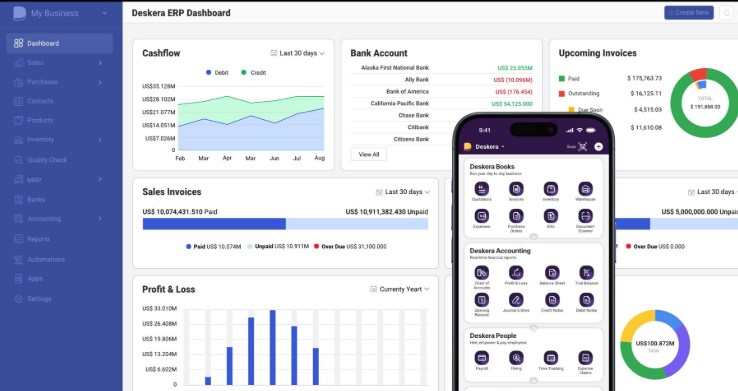
- Analytics & Dashboards: Role-based KPIs for store managers, merchandisers, finance, and executives.
- Scalability & Extensibility: API-driven architecture for connecting eCommerce platforms, marketplaces, and 3PLs.
- Compliance & Security: PCI-DSS, GDPR, and regional tax compliance baked in.
Best ERP Systems for Retail in 2025
Below are leading solutions trusted by retailers of all sizes:
- NetSuite Retail Edition: Cloud-native ERP with integrated POS, CRM, and order management built for multi-brand retailers.
- Microsoft Dynamics 365 Commerce: Unifies storefront, back office, and customer engagement within the broader Dynamics 365 suite.
- SAP S/4HANA for Retail: Ideal for large global chains needing real-time inventory and predictive analytics.
- LS Central (powered by Microsoft BC): All-in-one POS and ERP tailored for fashion, electronics, and grocery chains.
- Odoo Retail: Modular, open-source ERP offering POS, inventory, and eCommerce in one affordable package.
- Lightspeed Retail with Lightspeed ERP Connector: Great for specialty retailers wanting fast POS and integrated accounting.
Tangible Benefits of Implementing Retail ERP Software
Retailers that deploy a modern ERP system for retail business consistently report:
- 3–7 % Increase in Gross Margin: Thanks to accurate demand forecasting and reduced markdowns.
- 30 % Faster Order Fulfillment: Through automated pick-pack-ship workflows and store-to-door shipping.
- 20 % Lower IT Overhead: By retiring legacy point solutions and moving to a single cloud platform.
- Higher Customer Lifetime Value: Omnichannel loyalty programs and personalized offers drive repeat sales.
- Audit-Ready Financials: Consolidated books for simplified month-end close and compliance reporting.
Implementation Tips for a Smooth Rollout
- Start with Process Mapping: Document existing workflows before configuring the ERP.
- Phase Your Rollout: Tackle financials first, then inventory, then omnichannel POS for minimal disruption.
- Train Store Associates Early: Hands-on POS and mobile demos reduce adoption friction.
- Leverage Data Migration Tools: Cleanse SKU and customer data to avoid garbage-in, garbage-out.
- Measure Success: Track KPIs—sell-through rate, stockouts, average transaction value—post go-live.
Conclusion: Future-Proof Your Retail Operations
Choosing an ERP system for retail business is one of the most strategic moves a retailer can make. The right platform unifies channels, empowers staff, delights customers, and scales effortlessly as your brand grows. Take time to evaluate vendors, map your requirements, and partner with an implementation team that understands retail inside out.
Ready to transform your store operations? Schedule demos, request customer references, and build a detailed business case—your future profits will thank you.